
Montgomery Parole Versus Probation
Parole permits a person to serve part of a TDCJ sentence in the community under TDCJ Parole Division rules. Mandatory supervision, often shortened to MS, is another form of supervised state release governed by statute and Board of Pardons and Paroles review. Probation, formally called community supervision in Texas, is ordered by a criminal court. It may follow a conviction, a suspended sentence, or another court-approved path. Montgomery County Community Supervision and Corrections Department, or CSCD, handles local probation matters. TDCJ does not maintain a public statewide person-by-person probation search.
The source of the release is the best first clue. A person leaving a TDCJ unit on parole or MS may report to a district parole office. Someone released from Montgomery County Jail on bond may have court conditions but has not become a parolee just because the jail released them. The signed court order and docket show whether probation or another local condition applies.
| Point | Parole or MS | Probation |
|---|---|---|
| Authority | TDCJ and Texas BPP | Criminal court |
| Local route | Conroe District Parole Office | Montgomery County CSCD and court |
| Best proof | TDCJ or Parole Division record | Signed order, docket, or CSCD confirmation |
| County bond release | Not created by bond alone | May include court-set terms |
Verify Montgomery Post-Release Supervision
Start with identity and custody history, not a broad name match. Keep the full legal name, date of birth, TDCJ or SID number, county cause number, and release facility when known. Similar names can point to different people. The current TDCJ inmate search covers people now incarcerated in TDCJ, so absence after release is expected and is not a discharge record.
- Determine whether the person left Montgomery County Jail, a TDCJ unit, or another custodian. Check the release record and court docket.
- For a TDCJ parole or MS case, request release and supervision information from TDCJ using the TDCJ number, SID, or exact identifying details.
- Use the TDCJ county office cross-reference to confirm the assigned district office. Montgomery County maps to Conroe.
- For probation, review the signed Montgomery County court order and contact the local CSCD through the official CSCD directory.
- Ask the responsible office to confirm current status and whether supervision has ended. Do not treat an old address or old docket event as current proof.
TDCJ inmate information is also available at 936-295-6371 or 800-535-0283 from 8 a.m. to 5 p.m., Monday through Friday, and by email at pia@tdcj.texas.gov with the required identifiers. A person fully discharged from the sentence may no longer have an active supervising office. In that case, request the release, parole, MS, and discharge fields through the TDCJ public-information process.
Montgomery County Parole Office
TDCJ’s county cross-reference assigns Montgomery County to the Conroe District Parole Office. It also serves San Jacinto and Waller Counties. This office is a concrete route for a TDCJ releasee whose parole or mandatory supervision is assigned locally. It is not the right office for a county-jail-only release unless that person separately has an active TDCJ supervision case.
Conroe District Parole Office
4301 South Loop 336 East
Conroe, TX 77301
Phone: 936-756-0420
Fax: 936-760-3390
The office address helps confirm the correct district, but it does not prove a named person reports there. Assignment can depend on residence, release plan, and later transfer. Contact the agency with reliable identifiers and ask only for information it can release. For probation, route the inquiry to Montgomery County CSCD and the court that entered the order.
The official Conroe office capture shows the local agency route. View the TDCJ Region I office listing before using the contact details.
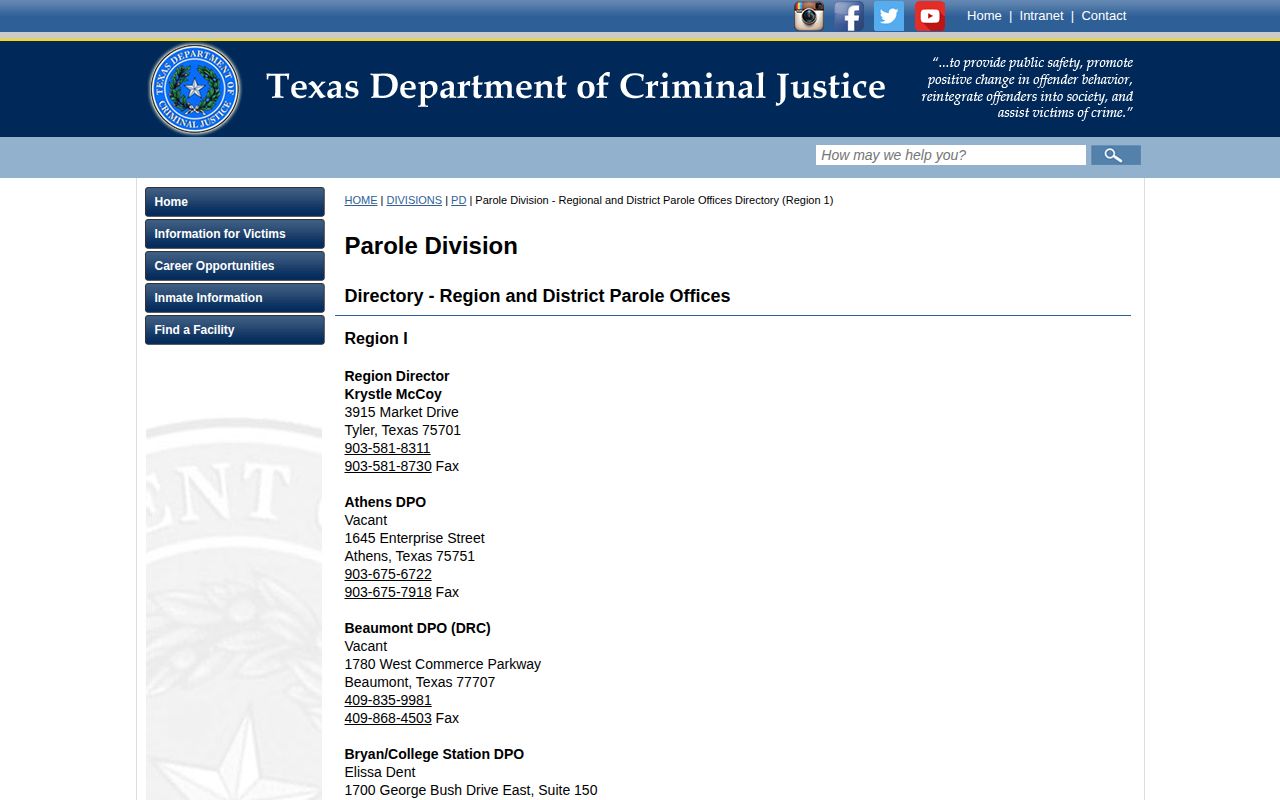
The listing connects Montgomery County state parole cases to the correct TDCJ district office.
Montgomery Supervision Warrants
A violation allegation does not erase the original release. It may lead to added conditions, a warrant, an administrative revocation process, placement in a program facility, continued supervision, or return to custody. An absconder is a supervised person whom the agency says has stopped reporting or whose location is unknown. That label is an agency status, not a new conviction.
MCSO provides a local warrant search by name or warrant number. The page warns that it is not an official court record and does not confirm a warrant remains active. It also displays an update time. TDCJ maintains separate parole warrant and absconder channels. Check the system tied to the alleged supervision, then confirm through the issuing agency or court.
The official Montgomery interface illustrates its limits. Read the MCSO warrant warning with the result.
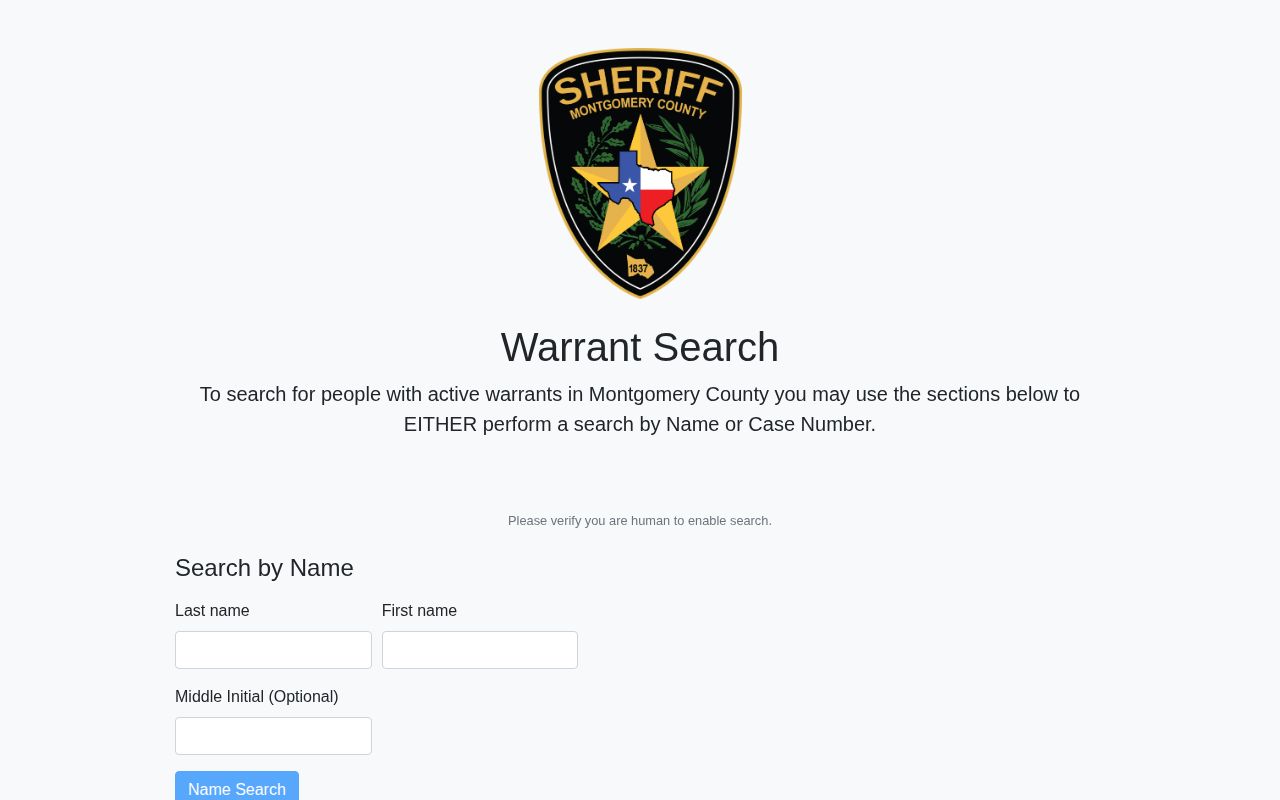
A timestamped name result is a lead for verification, not final proof of active status.
Montgomery Supervision Discharge Records
Discharge means the sentence or supervision term has ended. It differs from release from a jail or prison gate. A person can be released from custody while parole, MS, or probation continues. Conversely, a person whose supervision is discharged no longer reports under that case. Obtain the actual discharge field or signed court order rather than inferring the end from silence in a locator.
For state cases, ask TDCJ for actual release, parole or MS, and discharge dates. For probation, check the latest signed Montgomery County court order and the CSCD route. The county and district courts use separate Odyssey entrances, so one no-result search does not cover every Montgomery criminal matter. The full Montgomery County released-inmate search path explains how jail, court, and custody records fit together.
Montgomery Release Support Services
Tri-County Behavioral Healthcare Criminal Justice Services serves Montgomery, Walker, and Liberty Counties. Its official description includes work connected to people released from those county jails on conditional bond for mental-health treatment. It also describes continuity of medication and services after release. The provider’s page controls eligibility and access, so a county release or supervision status should not be presented as automatic qualification.
This route is distinct from parole and probation. A court may set treatment terms on a conditional bond, while CSCD or TDCJ may supervise a different legal status. Confirm the signed order, then contact the named provider. Keeping these roles separate helps families find support without mistaking a health-service referral for proof of parole.
Property After Montgomery Release
Texas retention rules preserve prisoner property inventories and receipts for the release or transfer date plus two years. The record documents the return of property that was not confiscated. MCSO’s jail telephone menu has a specific property option: call 936-760-5800, choose option 1 for jail, then option 4 for property. Property questions from a county booking belong with MCSO, not the parole office.
For eligible people leaving TDCJ, the TDCJ Reentry Program may assist with identity documents. That state service should not be promised to someone released only from Montgomery County Jail. Ask which system held the person and use its records and reentry channel. A property receipt, identity-document request, and supervision record answer separate questions.
Texas Parole Review Timing
The Texas Board of Pardons and Paroles does not hold formal person-by-person hearings for parole or mandatory-release consideration. Three-member panels review and vote files individually, so there is no public parole hearing calendar to search. The official review process says cases are identified about six months before initial eligibility and about four months before later review.
For status, call BPP at 844-512-0461. After approval, Review and Release Processing can be reached at 512-406-5202. Approval codes do not prove physical release. Programs, release-plan approval, records audits, certificates, scheduled dates, and holds may remain. The official panel explanation confirms the file-review model. Read the BPP panel-review statement.
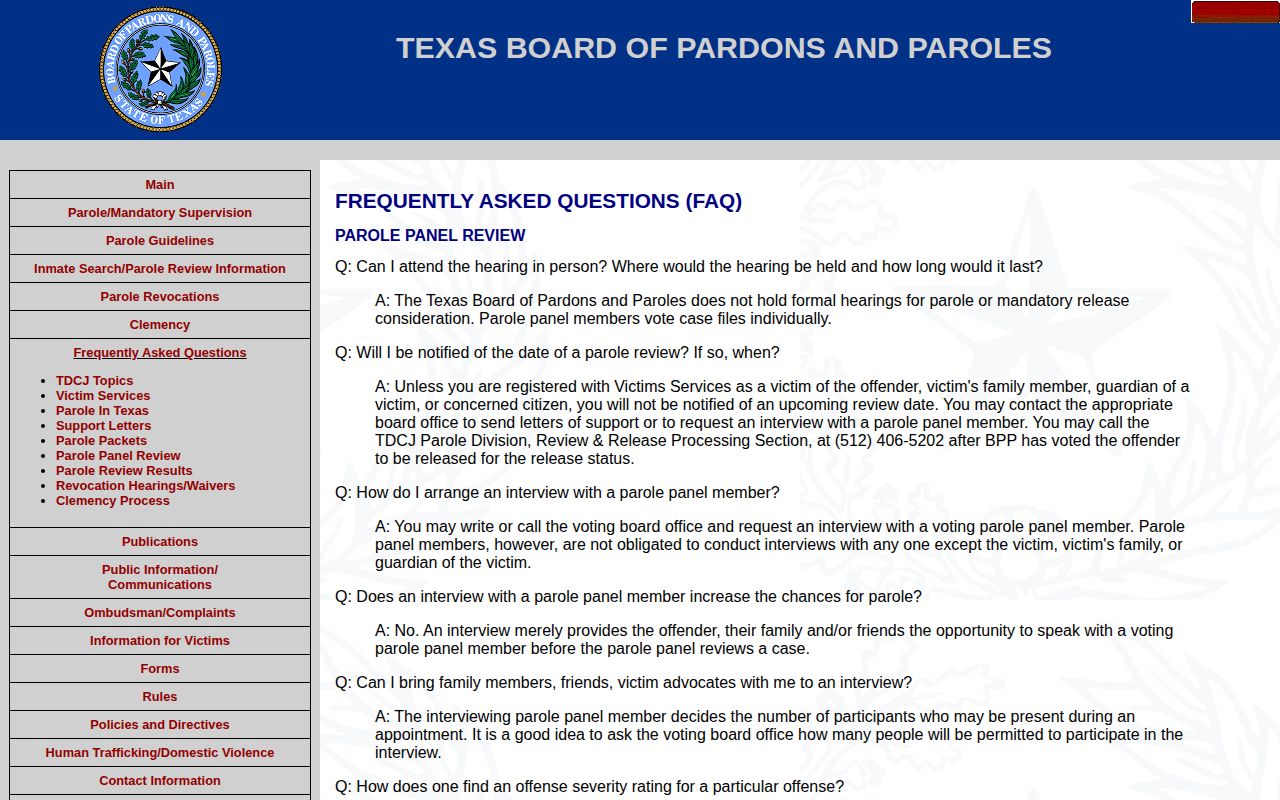
This distinction keeps a review date, approval vote, and completed release from being treated as the same event.
- Parole
- Community supervision after release from part of a state prison sentence.
- Mandatory supervision
- A statutory form of supervised TDCJ release, subject to eligibility and review rules.
- Probation
- Court-ordered community supervision handled through a CSCD.
- Discharge
- The end of the sentence or supervision term.